Christopher O'Sullivan Defends Government Fuel Supports
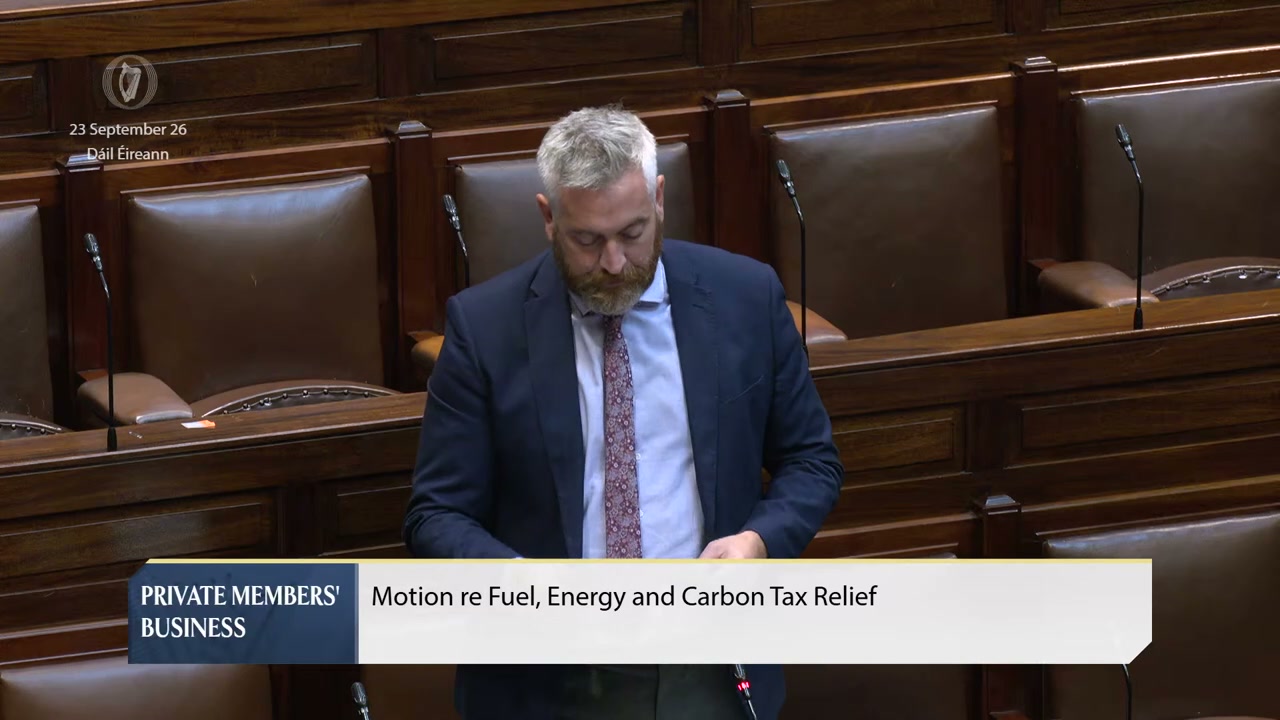
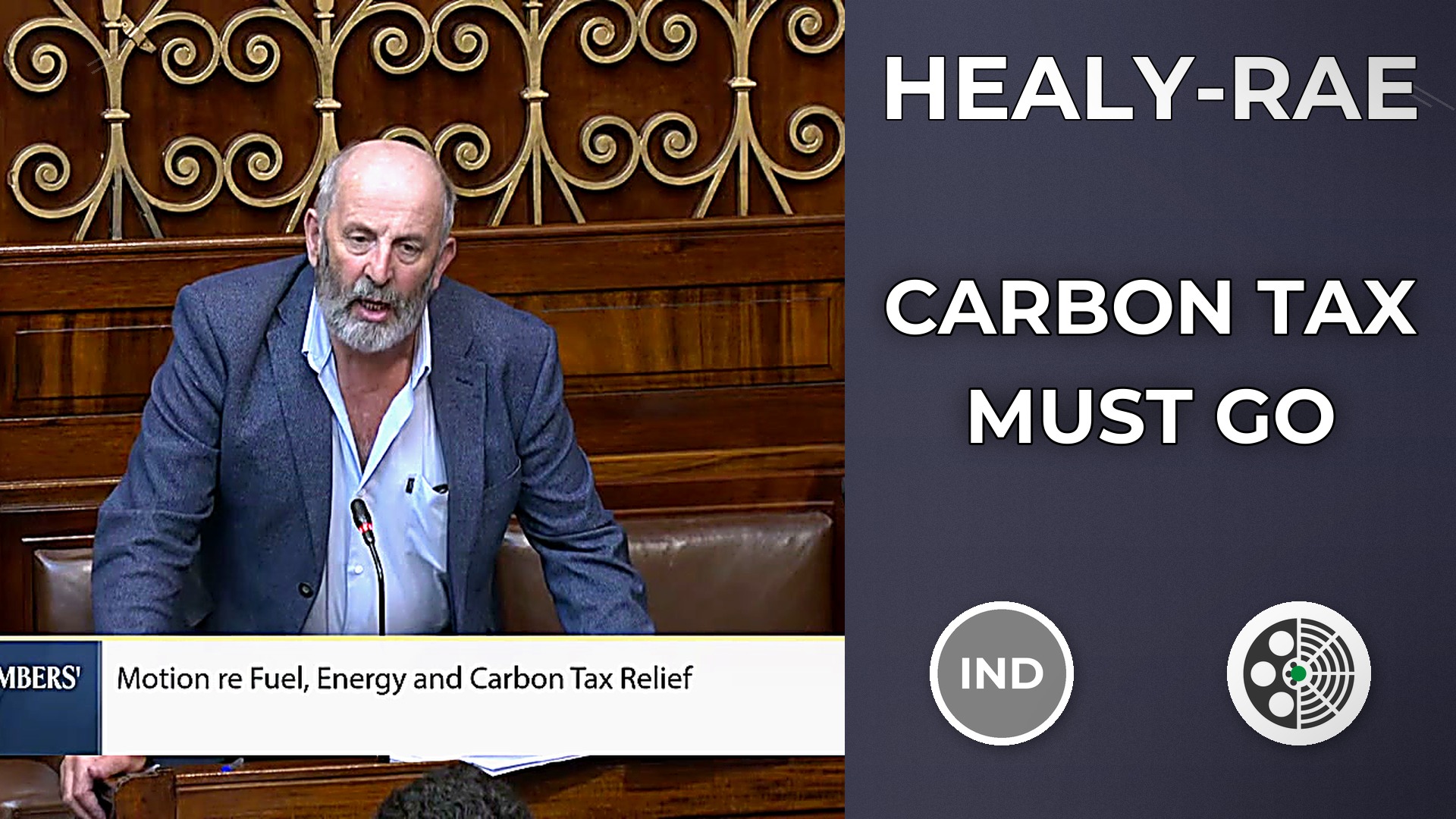
Christopher O'Sullivan defended the Government's counter-motion during a Dáil Éireann debate on rising fuel and energy costs. He argued that global oil prices, EU taxation obligations and the scale of existing supports made it impossible for the State to absorb all additional costs.
We publish thousands of recordings to make Irish politics transparent and resistant to manipulation. Spotted an error? Report it — together we are building a reliable archive of Irish politics.
As Minister Collins did earlier, I reiterate that the Government are moving a counter-motion in respect of the Deputy's Private Member's Motion. I fully appreciate the Deputy's concerns raised here this morning. As a Government, we do not control the wholesale price of oil, but we have acted in a very significant way to assist households and businesses with the very real impacts of this energy crisis. As I have stated already, the Deputy's Private Member's Motion does not fully reflect the considerable supports which have been implemented by this Government. Supports which have been designed to share the burden of the conflict in the Middle East with households, farmers, agricultural contractors, hauliers, tradespeople and businesses. The motion also fails to take into account obligations set out in EU legislation in relation to fuel taxation to which Government must adhere, including Ireland's obligation in respect of the emissions trading system for buildings, road transport and additional sectors. The motion does not reflect the reality of global commodity markets or recognise that the drivers of energy inflation are global in nature. Consequently, it is not possible for the State to fully absorb all of these costs. Government policy must be considered and it must be measured. To date, this Government has delivered one of the largest support packages in the EU per head of capita. In doing so, we have deferred the 1 May carbon tax increase on home heating fuels. We have reduced excise duty on diesel, petrol and green diesel. We have enhanced the diesel rebate scheme for hauliers and passenger transport operators, mitigating price increases in these sectors and the associated knock-on effects they have on food and passenger transport prices. We have funded payments to road transport operators under the Road Transport Support Scheme. We have funded payments to farmers, farm contractors and the fishing sector under the Fuel Income Support Scheme. And we have reduced the NOR levy. We have also extended the winter heating season by four weeks, increasing the total yearly payment to €1,216. The Government recognises the exceptional pressure that rising fuel costs have placed on our farmers and our farm contractors and worked intensively with the representative stakeholder groups with a view to providing adequate and targeted supports. The Government reduced the tax on MGO by €0.05 a litre and the NOR levy by another €0.02 per litre. On top of that, the Minister for Agriculture, Food and the Marine implemented a comprehensive €100 million fuel income support scheme to assist farmers, agricultural contractors and the fishing sector facing unprecedented increases in fuel costs, which gave a support rate equivalent to approximately €0.20 per litre of green fuel. And I have no doubt that we will continue to do so. As regards rural Ireland, I know better than most the impact that the fuel crisis is having on households in my constituency and others. I appreciate that people living in rural Ireland are twice as likely to use home heating oil as their main heating fuel. In fact, according to the latest CSO figures, around 26% of households in Ireland use it as their main heating fuel, and that's around half a million households. This Government understands that these are disproportionately older households, disproportionately rural and, in a lot of cases, lower-income households. Many of these households will be eligible for the aforementioned fuel allowance. But the Government is also very conscious of those who use home heating oil but don't qualify for that payment. That is why the upcoming Budget will also deliver for middle-income families. The facts are that this Government has acted time and time again to provide for households at risk of fuel poverty and to ease the burden on all households impacted by the crisis. The upcoming Budget will build on the work of the Budget 2026 to protect households from rising energy costs. Budget 2026 provided an extension until 2030 of the 9% FAT rate currently applied to gas and electricity bills. It provided for enhanced social protection payments, including an increase to the fuel allowance rate. As mentioned, an expansion in the fuel allowance eligibility rules benefitting approximately 50,000 households. It provided the €400 income tax disregard for households involved in micro-generation, which was extended for a further three years to the end of 2028. While no Government can fully shield households from all the impacts of this crisis, this Government has acted to mitigate the impacts of the crisis time and time again. We have acted to support households. We have acted to support farmers. We have acted to support agricultural contractors. We have acted to support hauliers. We have acted to support tradespeople. We have acted to support businesses. This Government will continue to take action in Budget 2027. For the reasons stated above, I again press the Government's counter-motion.
Thank you for downloading 🙏
If you publish this material on social media, we would be very grateful if you tagged VideoParliament. It helps us reach more people and keep building a transparent archive of Irish politics.