

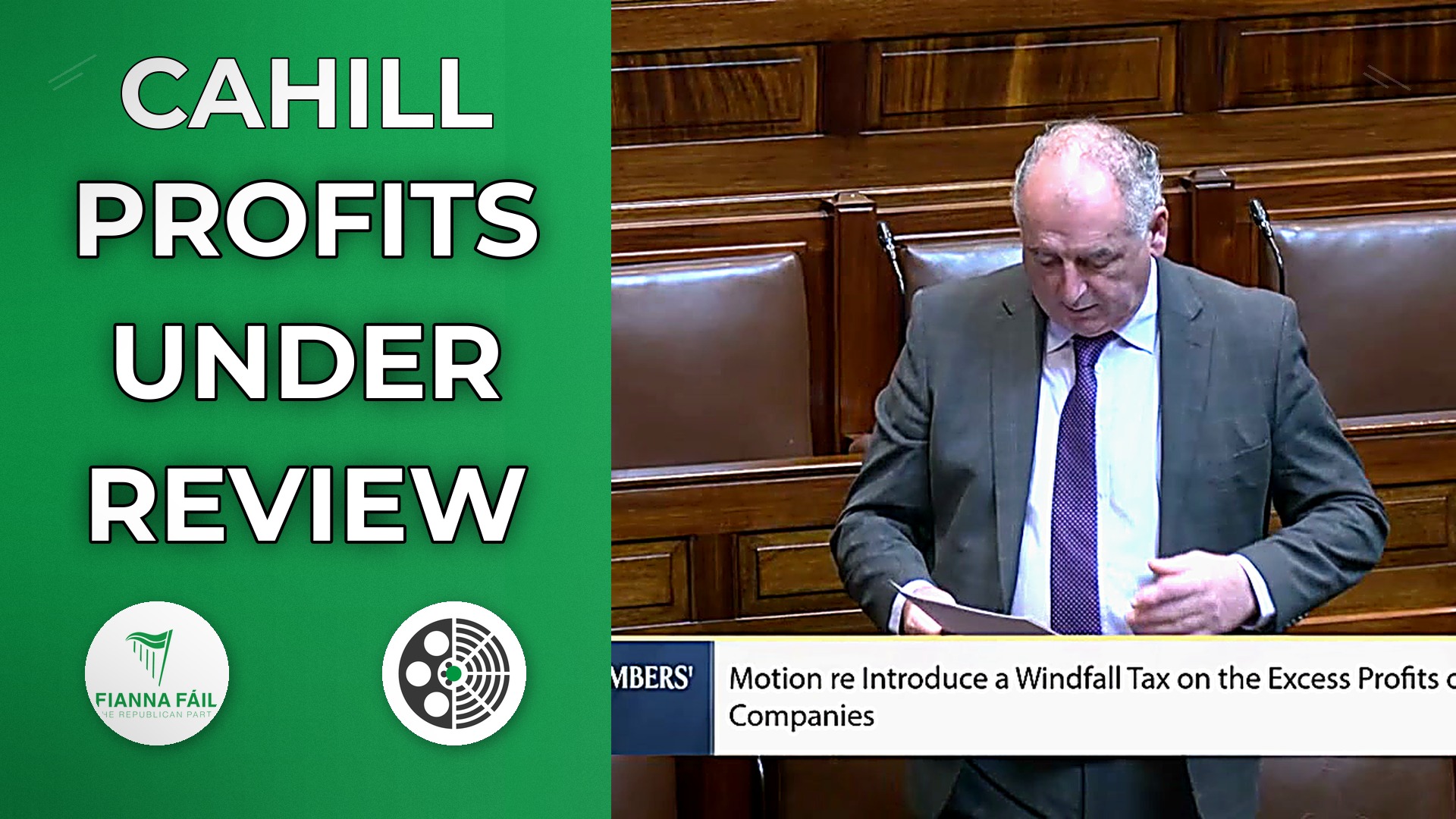


Michael Cahill backs review of energy windfall profits
Energy costs and consumer supports
Cahill said households and businesses were under significant pressure, with wholesale electricity prices having risen almost 10% in August alone. He pointed to the extended 9% VAT rate on gas and electricity, an increased fuel allowance and expanded eligibility for electricity supports.
He highlighted Budget 2026 funding for retrofitting and energy upgrades delivered since 2019. Cahill also said the Social Democrats had raised a legitimate question about whether the State should capture a share of extraordinary gains made by energy companies to help protect consumers.
Cahill noted that a previous temporary solidarity contribution and market revenue cap raised a combined £456 million. He said Ireland should keep options under review, while considering the interconnected European electricity market and the case for a co-ordinated EU approach.
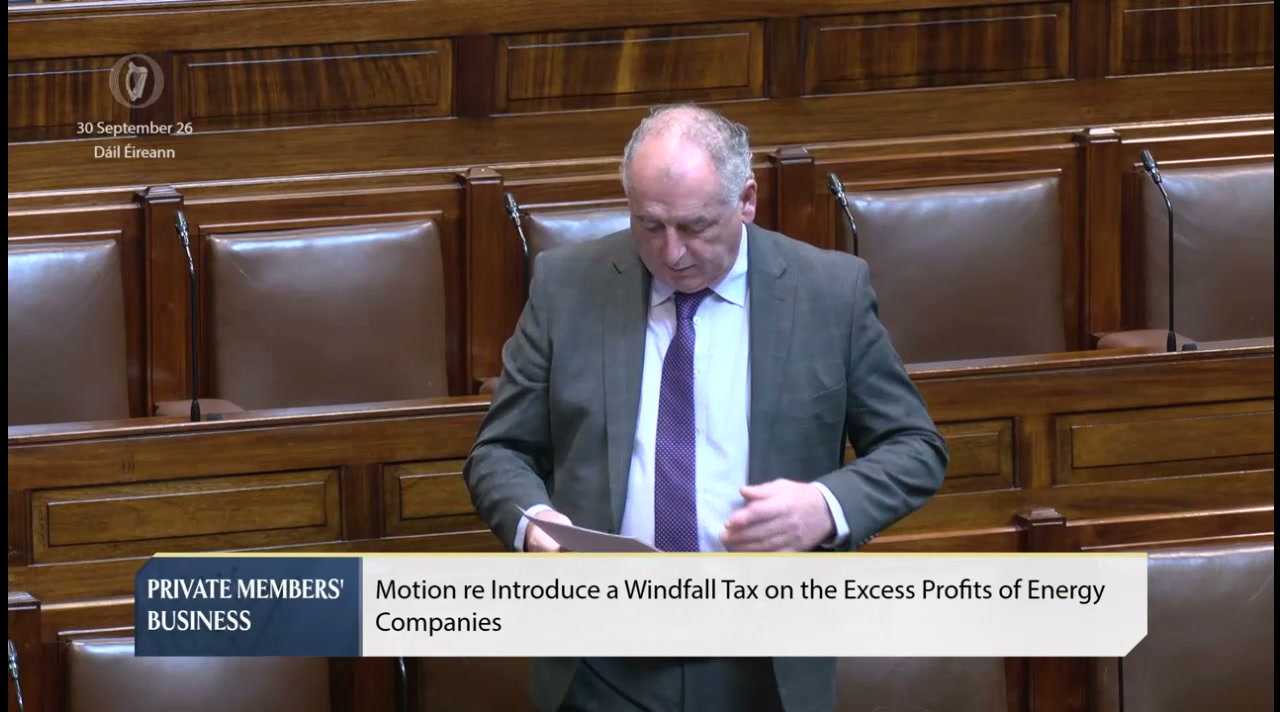
The National Energy Affordability Task Force is working on an Energy Affordability Action Plan, with further decisions expected to form part of the Government’s 2027 process. Watch the recording to hear Michael Cahill’s full contribution.
Cahill said households and businesses were under significant pressure, with wholesale electricity prices having risen almost 10% in August alone. He pointed to the extended 9% VAT rate on gas and electricity, an increased fuel allowance and expanded eligibility for electricity supports.
Retrofitting and windfall profits
He highlighted Budget 2026 funding for retrofitting and energy upgrades delivered since 2019. Cahill also said the Social Democrats had raised a legitimate question about whether the State should capture a share of extraordinary gains made by energy companies to help protect consumers.
A European approach
Cahill noted that a previous temporary solidarity contribution and market revenue cap raised a combined £456 million. He said Ireland should keep options under review, while considering the interconnected European electricity market and the case for a co-ordinated EU approach.
Energy affordability planning
The National Energy Affordability Task Force is working on an Energy Affordability Action Plan, with further decisions expected to form part of the Government’s 2027 process. Watch the recording to hear Michael Cahill’s full contribution.
We publish thousands of recordings to make Irish politics transparent and resistant to manipulation. Spotted an error? Report it — together we are building a reliable archive of Irish politics.
Other speeches
Tego samego dnia All speeches from this day →
Paul Lawless
Paul Lawless Calls for Tighter Citizenship Rules
Mattie McGrath
Mattie McGrath Demands Urgent Eye Care for South Tipperary Children
Catherine Callaghan
Catherine Callaghan asks when National Security Authority will open
Rose Conway-Walsh
Rose Conway-Walsh: ‘Nobody should be freezing in their homes’
Mattie McGrath
Mattie McGrath Condemns Dundrum Handling as ‘Scandalous’
Paul Nicholas Gogarty
Paul Nicholas Gogarty Calls for Family Court Transparency
Transcript
Minister, there is no doubt that households and businesses are under enormous pressure
from rising energy costs, wholesale electricity prices increased by almost 10% in August alone
and significantly higher than they were a year ago.
The international situation, particularly the conflict in the Middle East, is having
a direct impact on global energy markets and ultimately on consumers here in Ireland.
The government has already put significant supports in place.
The 9% VAT on gas and electricity has been extended.
The fuel allowance has increased to 38 Euros per week.
Electricity has been expended to the Working Family Payment recipients and the fuel allowance
season was extended by four weeks this year.
There has also been substantial investment in energy efficiency.
The Budget 26 provided a record £660 million for retrofitting, while more than 287,000
houses received energy upgrades and it was delivered since 2019, but we cannot be complacent.
The issue raised by the Social Democrats is a legitimate one when energy companies are
benefiting from extraordinary market conditions.
We need to examine whether the state is capturing an appropriate share of these gains and whether
they can be used to protect consumers.
Ireland has already demonstrated that such mechanisms can raise significant revenue.
The previous temporary solidarity contribution and market revenue cap raised a combined £456 million.
At the same time, we have to be careful about the design of any new measure Ireland operates
within the interconnected European electricity market and the government's position is that
a co-ordinated EU approach would provide a more effective and level playing field than
individual Member States acting separately.
As a government backbench today, I believe it is important that we continue to keep every
available option under review, including mechanisms to address extraordinary profits where they
The National Energy Affordability Tax Force is currently working on an Energy Affordability
Action Plan and the government has indicated that further decisions will also form part
of the government's 2027 process.
For more UN videos visit www.un.org