

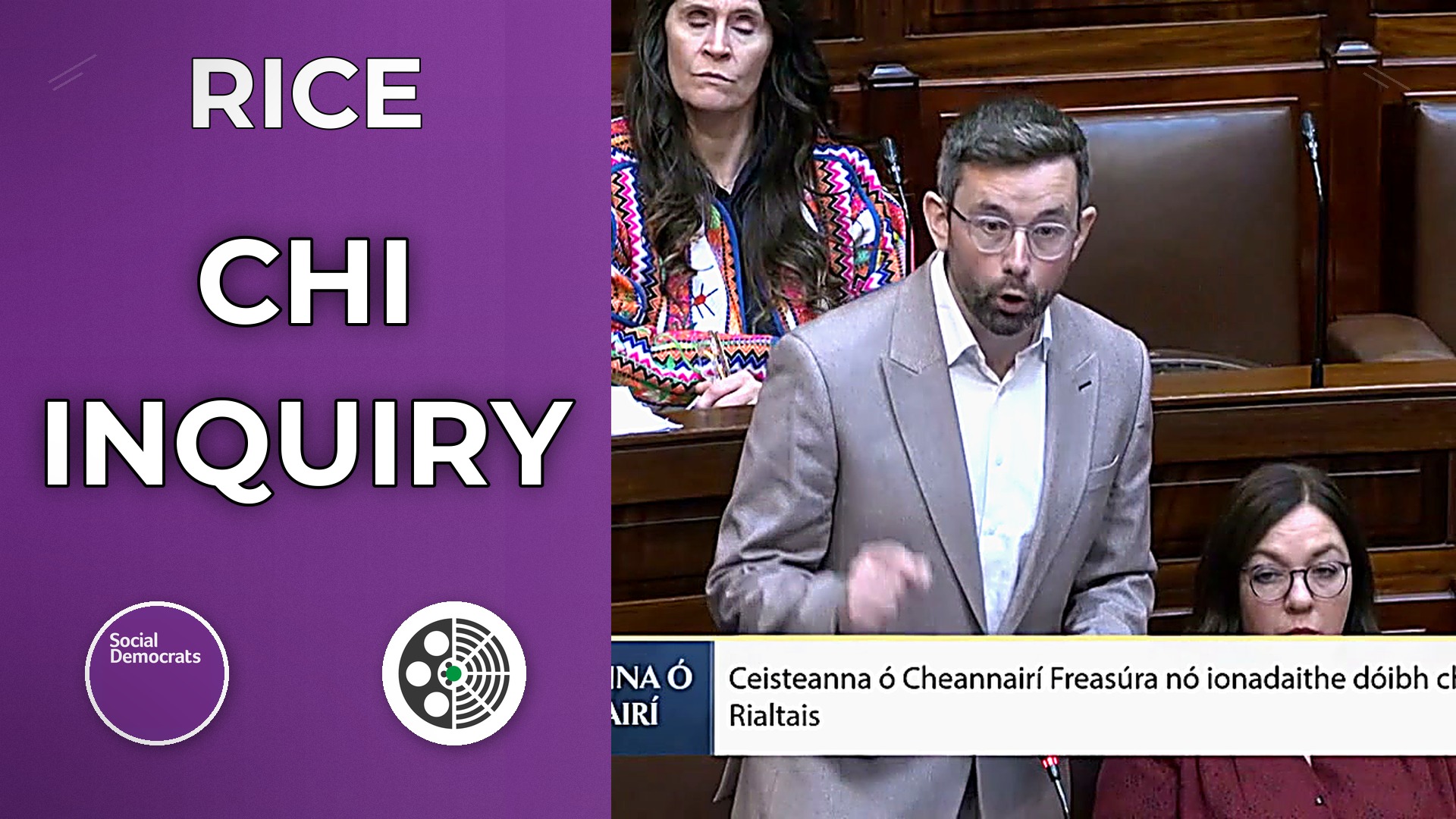


Pádraig Rice challenges proposed CHI inquiry
Pádraig Rice challenged the Government’s proposed inquiry into children’s scoliosis and spina bifida care during an Oireachtas debate, four days after the CHI SCOPE inquiry report was published. He called for the inquiry to examine events before 2019 and give families the option of giving evidence in public, arguing that their concerns must be addressed.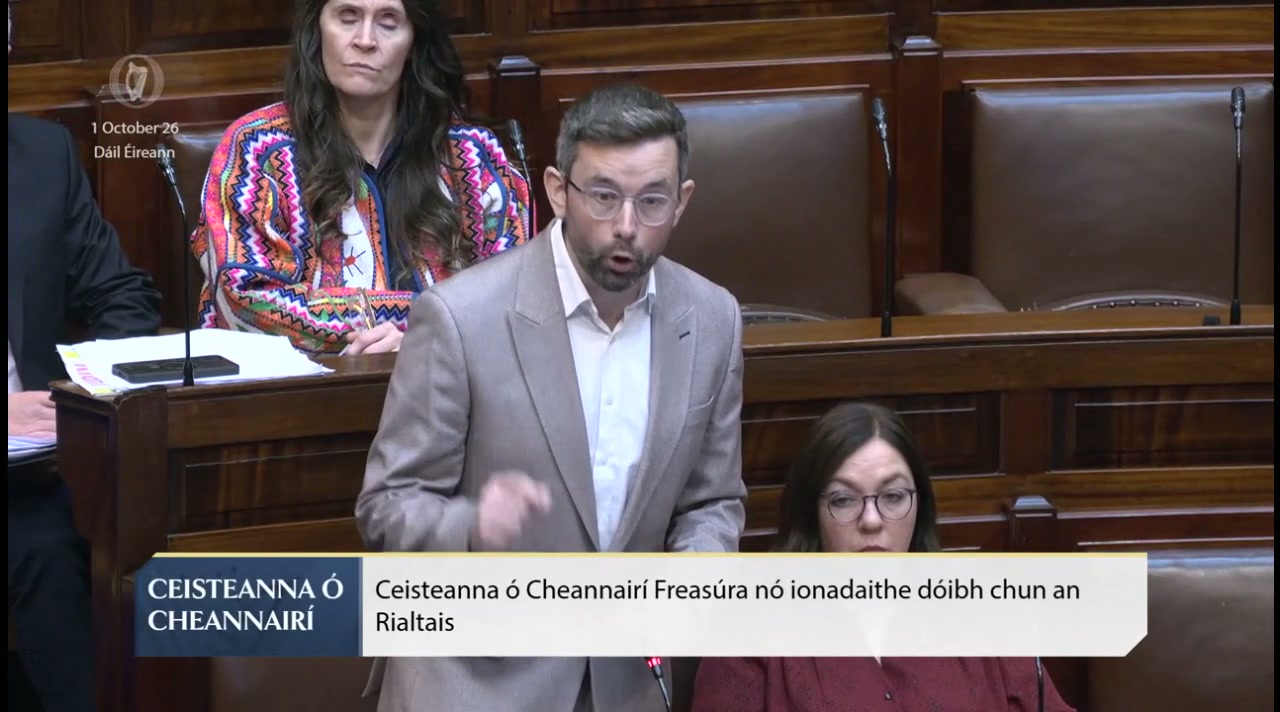
We publish thousands of recordings to make Irish politics transparent and resistant to manipulation. Spotted an error? Report it — together we are building a reliable archive of Irish politics.
Other speeches
Tego samego dnia All speeches from this day →
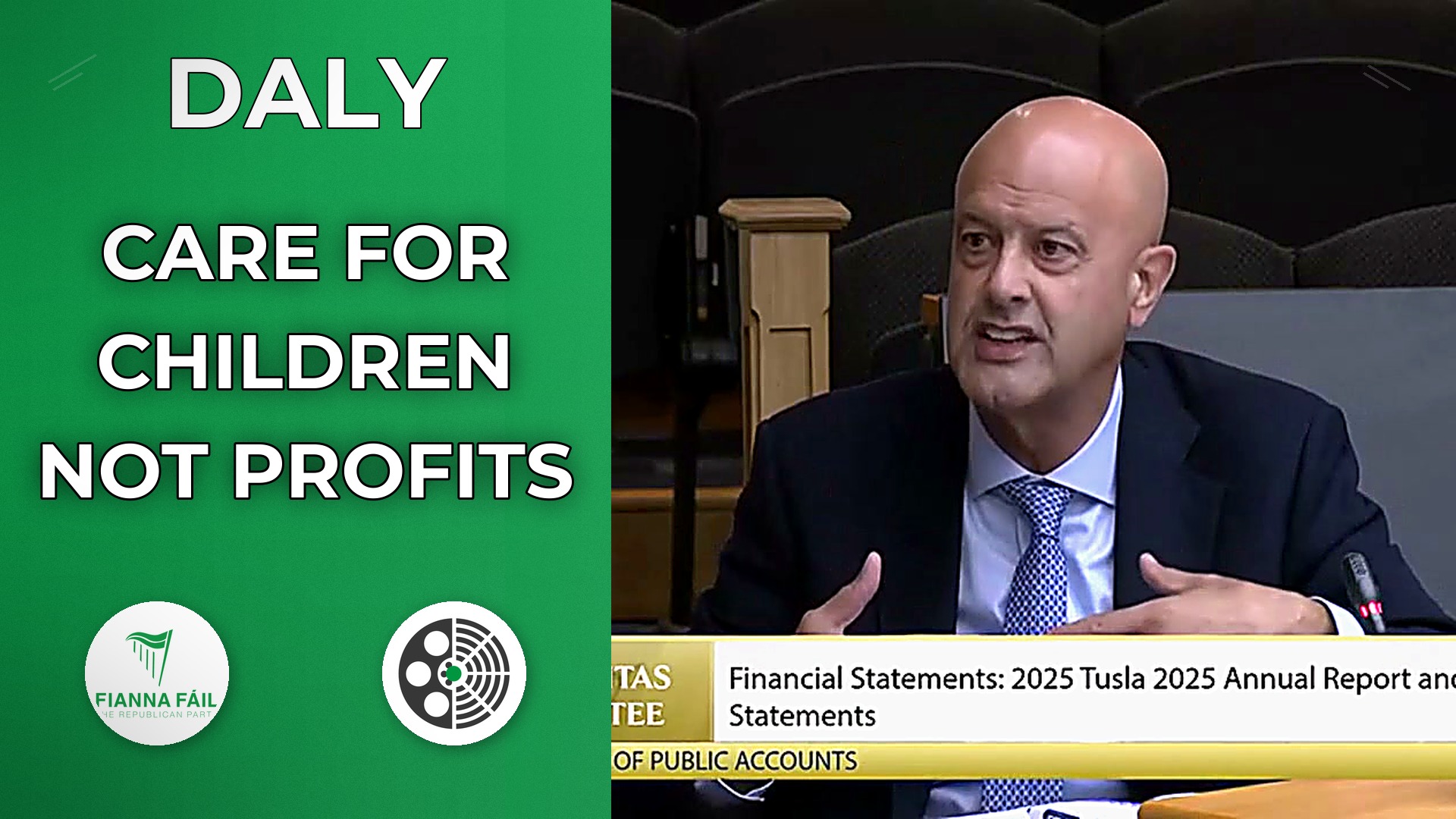
Martin Daly
Martin Daly questions private profits in child residential care
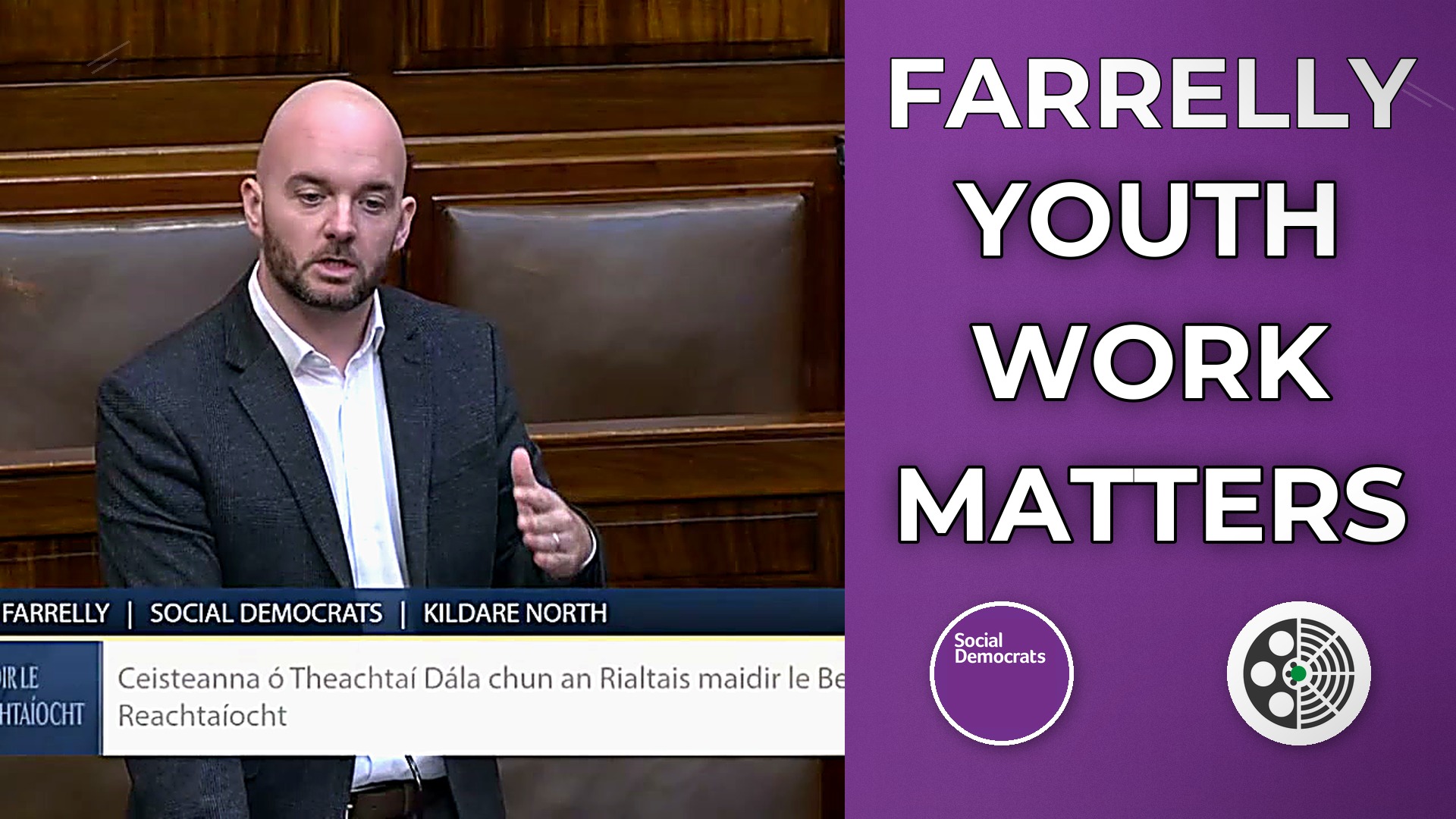
Aidan Farrelly
Aidan Farrelly Seeks Action on National Youth Work Strategy
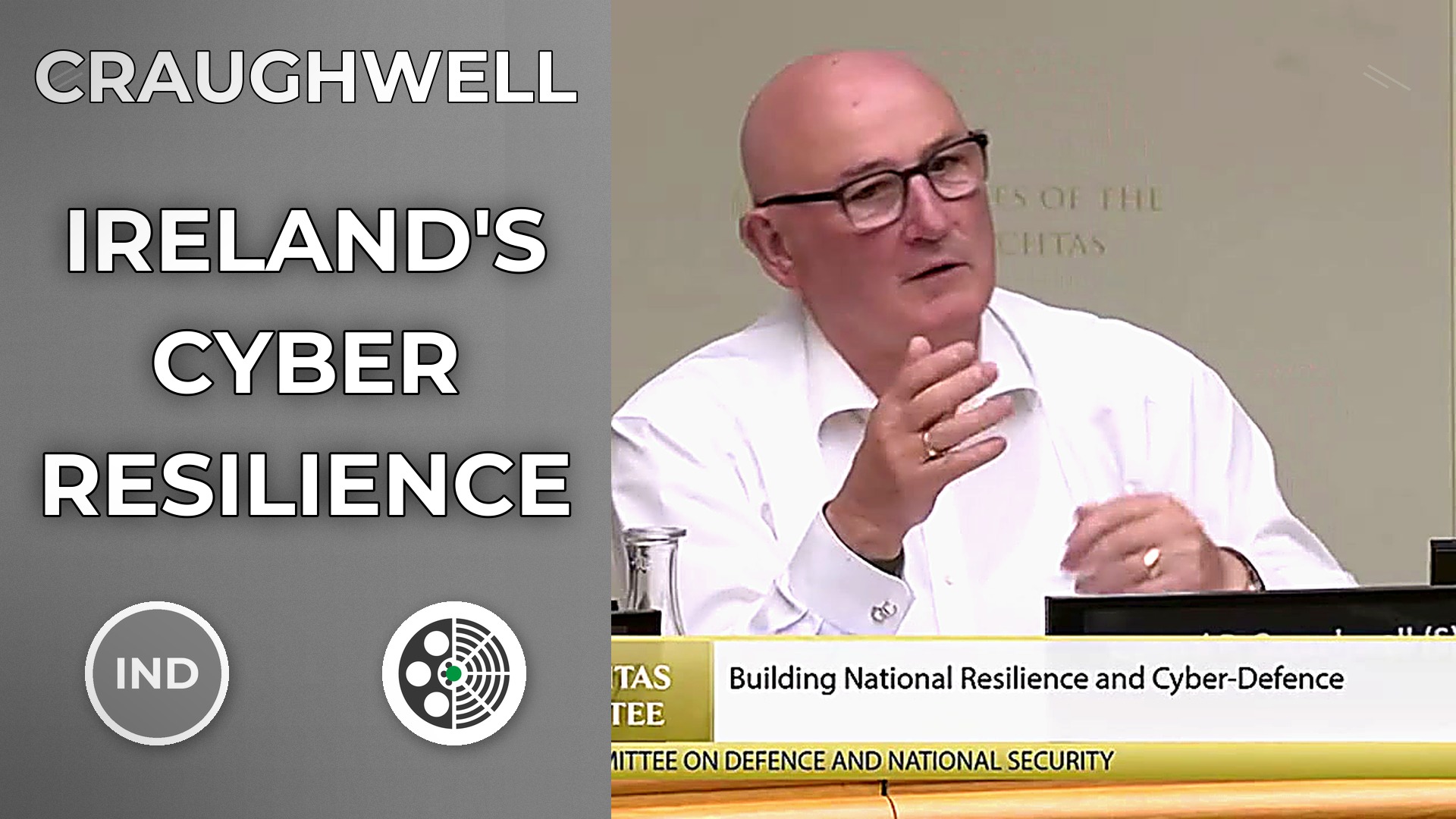
Gerard P. Craughwell
Gerard P. Craughwell Questions Ireland’s Cyber Resilience
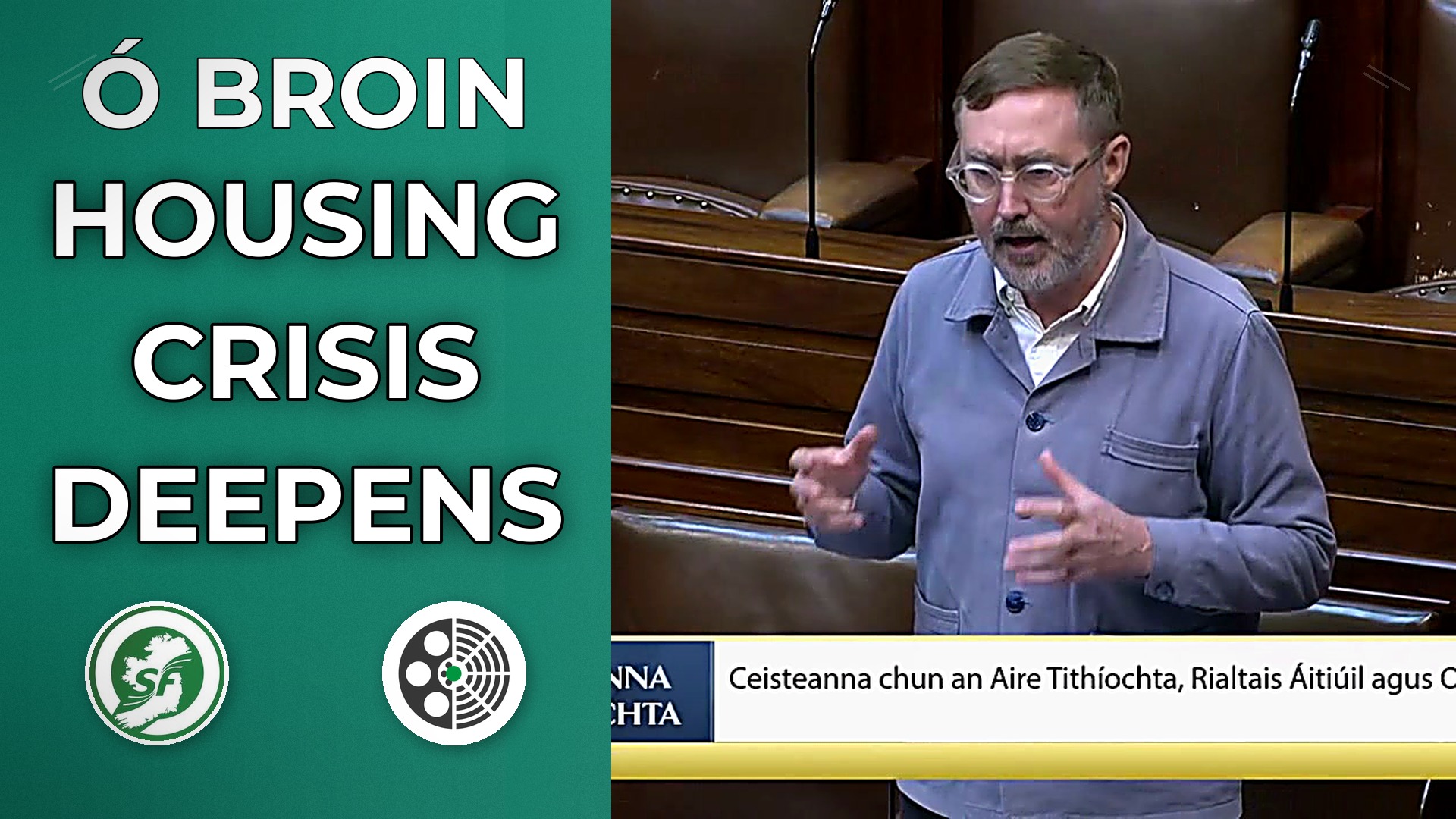
Eoin Ó Broin
Eoin Ó Broin challenges Minister over rising homelessness
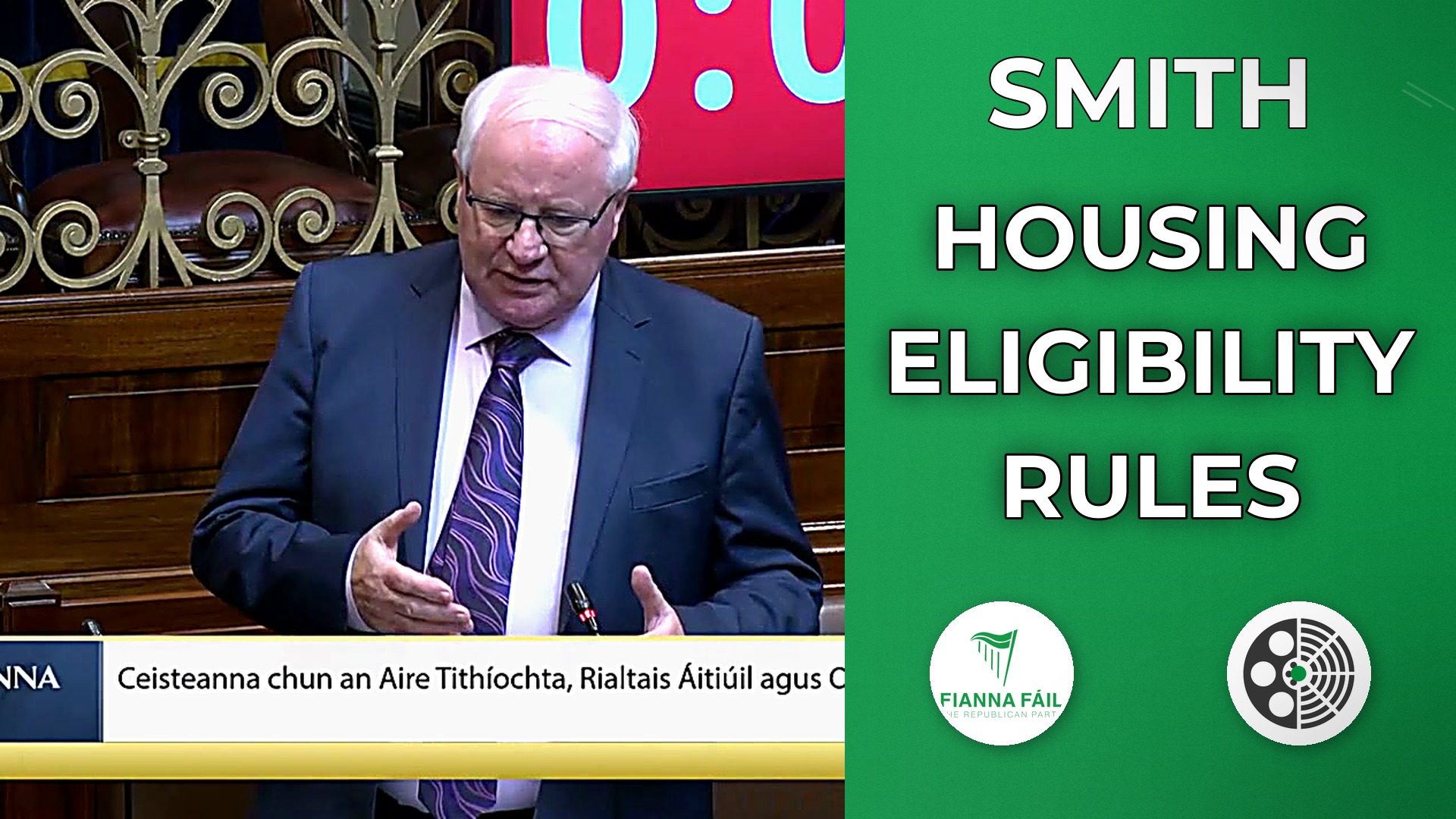
Brendan Smith
Brendan Smith calls for higher social housing income limits
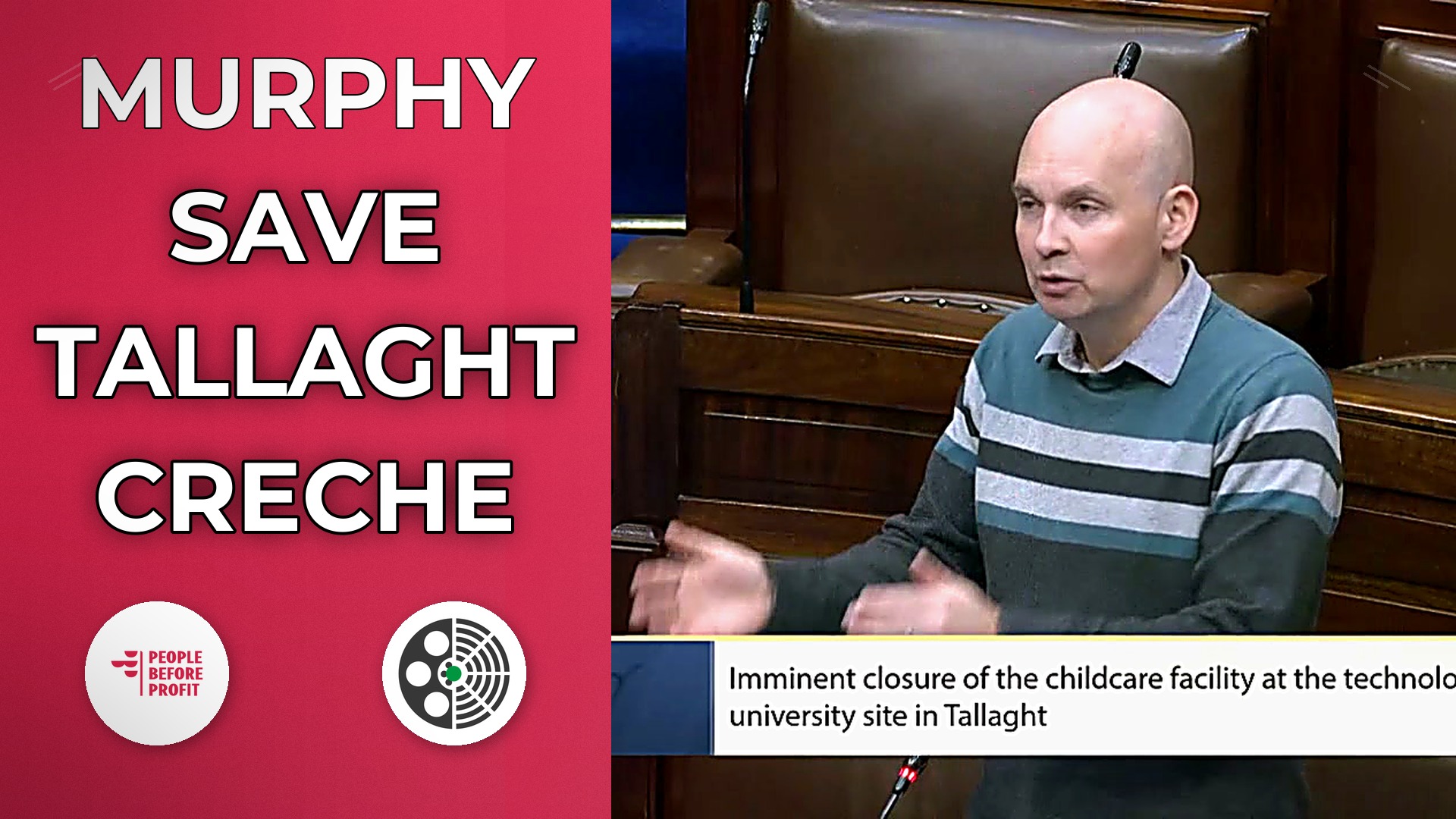
Paul Murphy
Paul Murphy: Keep TU Dublin Creche Places Open in January
Transcript
It's now four days since the CHI SCOPE inquiry was published, and the serious concerns of
the families have not been addressed.
Worse, they've been ignored.
I want to reiterate why the families have these concerns.
Their children, who have scoliosis and spina bifida, were repeatedly failed by both the
health service and the government.
Critical surgeries were delayed, sometimes for years.
In some cases, the delays were so long that the children became inoperable.
Children were left in excruciating pain, as the curvature of their spines reached dangerous
levels.
For some, their tiny bodies were twisted so much that their internal organs were crushed
and damaged.
They had difficulty breathing, were unable to sleep, and spent nearly every waking moment
either uncomfortable or in pain.
Children missed out on school and time with friends.
Their parents had to watch them suffer, helpless and unable to do anything to alleviate their
Some families suffered the biggest loss imaginable, the death of a child.
The word scandal can sometimes be overused in Irish politics, but the word feels inadequate
to describe what these children and their families have endured.
This was repeated failures that lasted for years and involved potentially thousands of
Which is why you must get this public inquiry right.
After everything these children and their parents have gone through, surely that's the
least they deserve.
And as what's been proposed this week simply doesn't cut it.
Surely you can see that.
An inquiry primarily to be held behind closed doors, which uses 2019 as the starting point
when we all know this goes much further back.
In 2014, for example, a report found serious failures in special services, including urology.
Three years later, in 2017, you made the infamous promise to these families and their children
that no one would wait longer than four months for surgery.
The events leading up to that and your broken promise will now be erased from the record
of the inquiry.
That is wrong and you know it.
Tánaiste, the government has one chance to get this inquiry right.
These children and what they have suffered cannot be airbrushed out of the record.
And that is what the families fear most.
Because they have no trust in this government, no trust in CHI and no trust in the proposed inquiry.
So, Tánaiste, will you ensure that their concerns are addressed?
Will you ensure that this inquiry is not primarily held behind closed doors?
And will you expand the terms of reference so that it begins before 2019 and crucially
covers the time when you were the Minister for Health?
I think we are having an debate around this.
It is helpful that we actually listen to each other.
I think it is very helpful if you listen to what the Taoiseach said in this House yesterday
when this issue was raised.
Because it is not helpful, I do not think, to parents.
Many, many, many parents who engage with Mr Farrell's scoping inquiry, a very eminent
senior counsel, I am sure you would accept that, who has done a very, very comprehensive
piece of work.
He has listened to so many people, read so many documents and he has come to a view,
not me, not you, he has come to a view, an independent scoping inquiry.
You would probably be asking a lot more serious questions if we decided there is an independent
scoping inquiry, let's ignore what the independent senior counsel has said.
So, that is the first point I would make.
The second point I would make is, it is utterly wrong to suggest, and legally wrong, to suggest
that a commission of inquiry is all held in private, or mainly held in private, or mainly
held in private.
It is, because the Taoiseach who is the head of this government made it very clear yesterday
in relation to that issue, and let me make it very clear again in relation to this issue.
The Leader of the Opposition yesterday rightly and accurately and fairly acknowledged that
there may well be parents, may well be parents, and may well be others who wish to cooperate
with a statutory inquiry and wish to do that in private, as is their right, as is their
right.
There may well be others, and will be, who will want to give their evidence in public,
as in my view is their right.
And the mechanism of a commission of inquiry allows for that latitude.
It allows for parts of an inquiry to be held in public, it allows for parts of an inquiry
to be held in private.
And we have to respect both, because there are families that have gone through hell and
back, families that have gone through the most unimaginable agonies.
Some of those families are known to people in this Oireachtas because they have felt
the need to speak out and speak up, as is their right.
Some families, you don't know their name and I don't know their name, but they have as
much right to be heard too.
So, we have got to get this structure right, and what we have said very, very, very clearly
is the lengthy inquiry report, I think it's a scoping inquiry report, around 134 pages
or thereabouts, from Mr Farrow, has been published.
There will now be engagement on the terms of reference, through the Minister for Health,
with the African Scouts.
That should happen.
There will then obviously be the terms of reference having to be put before this House.
That has to happen too.
This House has to ratify them, so that you all have a role in it.
This House has to ratify them.
I think we have to be very clear in giving effect in that process to what the Taoiseach
said, and I'm now paraphrasing him, yesterday, around the latitude that the chairperson will
have in terms of timeframes.
In my view, there should be no rigidity around 2019 or anything like that.
So this is about getting this right.
We know, and those of us who have been in this House for quite a period of time know
too, getting the terms of reference right matters, and getting the chairperson right
matters, and making sure that there's ongoing engagement and trust from the advocacy groups
with that chairperson will be absolutely key.
So the government has agreed on and has been crystal clear on the need for a statutory
inquiry.
We have put in place Mr Farrell, who I'm sure you'd accept is completely independent, a
very robust and competent senior counsel.
We have published his report for all to see, and we will now see that there is engagement
and that the Department of Health will work closely in consultation with the Office of
the Attorney General, and there will be a call for input from advocacy groups in the
terms of reference.
And I really do want to say that.
And then the final terms of reference will come back to government for approval.
OK, Royce.
Thanh Nhat Hanh, I read Mr Remy's report from start to finish, and I spent the last couple
of days talking to parents and families who are furious, who said this is worse than they
feared, who feel unheard, who said that this has the potential to be a farce, Thanh Nhat
You have to listen to them.
I also listened to the Taoiseach yesterday, who said there'd be more consultation.
Meanwhile, the Minister for Health said she accepts the recommendations in full.
So which is it?
Is there going to be more consultation and changes to what's proposed, or are you accepting
in full?
You have to get this straight, because we're hearing different things from both the Taoiseach
and the Minister for Health.
The Taoiseach said yesterday there's going to be discretion around the timeline.
Is that going to be locked into the terms of reference?
Is that guaranteed?
Are we going to look at the period when you were Minister for Health, back in 2017, when
you made that commitment?
Families feel like an afterthought here, and they want more transparency.
And you know that the vast majority of the families pulled out of the Scoping Inquiry
because they weren't given the information they wanted.
The report mentions eight reports.
Three of them remain unpublished, not provided to the families, and they said they need to
see them.
So will you change tack here, Taoiseach?
We need to go back further in 2019, and this primarily needs to be held in public, at the
family's demand.
So I think when we talk about families, we have to accept that there's a diversity of
views here.
There's absolutely some families of the view, absolutely, and some advocacy groups of the
view, absolutely.
Sorry, sorry, just allow me to speak.
Absolutely of the view that this should be held fully in public.
There are also some who don't believe that, and it doesn't matter the number.
Everybody has a right to be heard.
Everybody has a right to be heard.
And when you're talking about the medical information of your child or you, you have
a right to be heard in a way that works for you.
And we don't need to be adversarial in this, choose to be if you want, or we can try and
actually get a flexible structure in place based on the expert legal opinion of a very
eminent senior counsel.
And we are very clear, very clear that we've published the terms of reference, sorry, excuse
me, we've published the Remy Farrell report in full.
That's important to do from a transparency point of view, because he was asked to do
a job, and we shouldn't impugn his reputation in the job he did.
We will then have engagement, both with the Attorney General's Office, and we've said
very clearly there will be engagement with the Department of Health and the advocacy
groups on the terms of reference.
The terms of reference will have to come back.
You're actually making fair points that I think merit consideration as to how we ensure
that latitude is reflected, because the rigidity around 2019, I agree, and also the idea of
making sure that those who wish to give evidence in public can do so too.
I agree.
But we've got to have those conversations as to how to do this right, and I don't believe
it's beyond the ingenuity of this House to get this right.
But I share your view that getting the structure of this right is very important.